
How to Check for a Shiawassee County Warrant
There is no button that clears the question in one click. Michigan does not publish a public statewide active-warrant search. Shiawassee County has no online warrant list of its own. That fact shapes every real answer. You confirm a warrant by contacting the office that holds it, not by browsing a site.
Three channels do the work. The court that issued the warrant knows its status. The police agency assigned to serve it knows too. The statewide case system, MiCOURT, can show court dates and case details that hint at an open warrant. Start with whichever fits your situation, then confirm with a second source before you act.
The Shiawassee County Sheriff's Office is the anchor law-enforcement contact for county residents. Its homepage lists the sheriff, the mission, and the main phone lines.
A look at the Sheriff's own site shows what county law enforcement puts online.
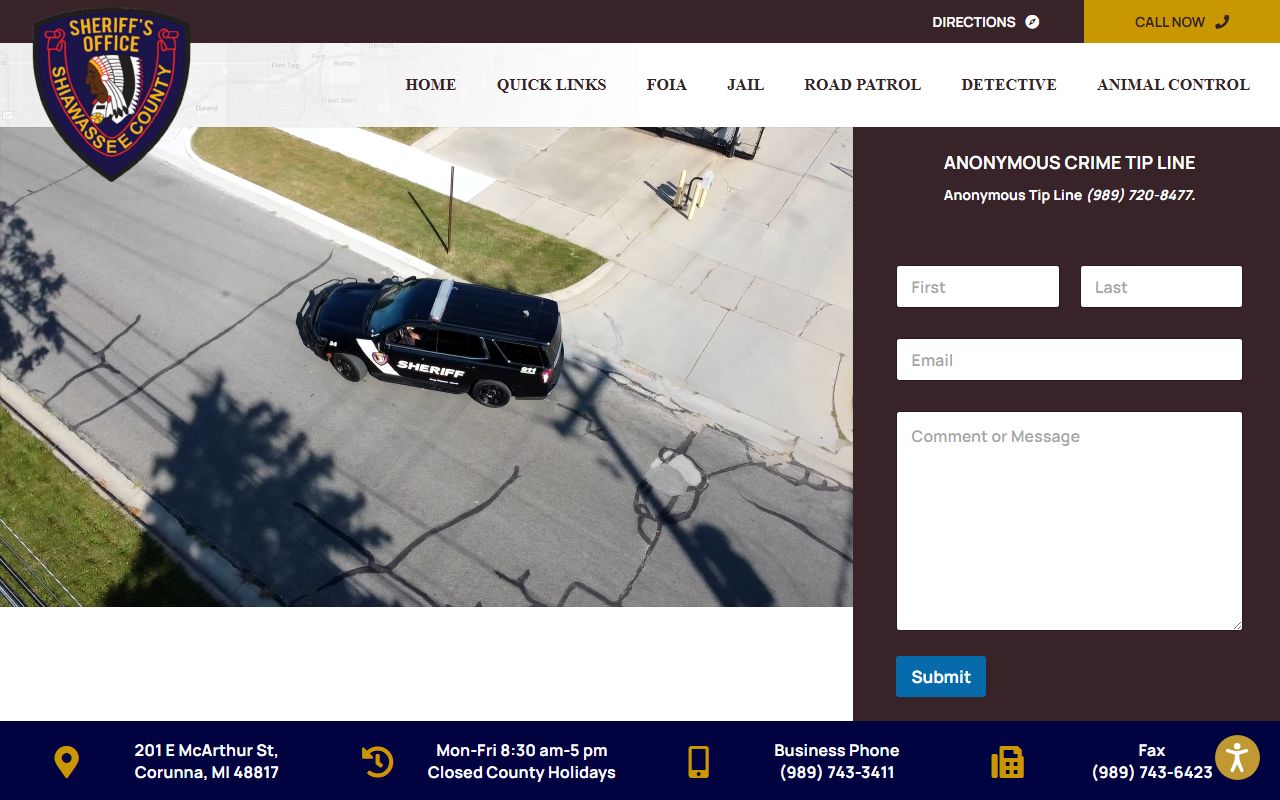
The site offers contact numbers and safety tools, but no live warrant lookup. That is why the phone remains the first step for a Shiawassee County warrant check.
Who Knows Shiawassee County Warrant Status
Many people call the Prosecuting Attorney first. That is the wrong door. The Shiawassee County Prosecuting Attorney authorizes a criminal complaint. The court authorizes the arrest warrant. The police department handling the case finds and arrests the person named.
The office spells this out plainly. Its public FAQ answers "Can you tell me if an arrest warrant exists?" with a flat "No." The prosecutor may not even know if a warrant is still open. That fact lives with the police and the court.
The Prosecuting Attorney FAQ page lays out this split of duties in the county's own words.
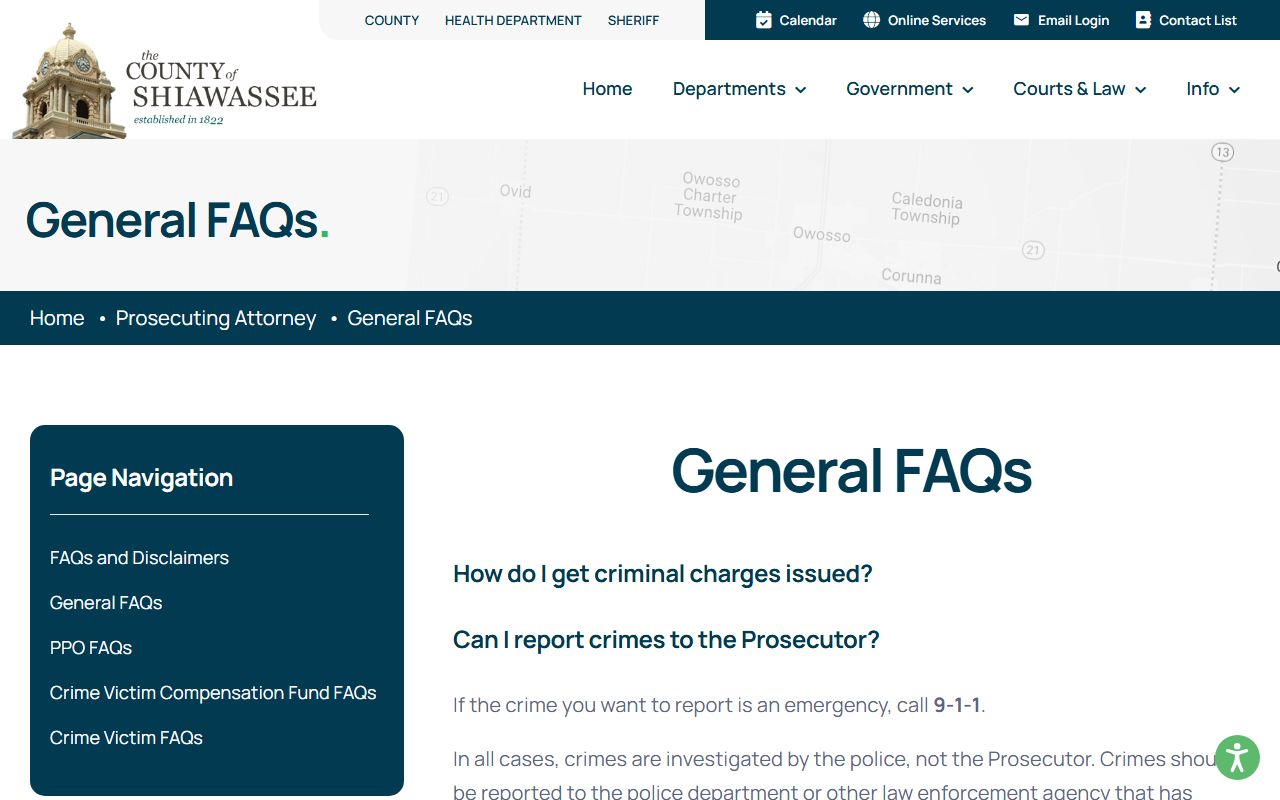
So aim your questions at the police agency and the court, not the prosecutor. Prosecutor Scott Koerner's criminal division answers charging questions at 989-743-2373. Warrant status, though, stays a court and police matter.
Types of Warrants in Shiawassee County
Warrants are not all the same. The type tells you which court and which process apply. It also shapes what happens when the warrant is served. Knowing the label helps you ask the right office the right question.
- Arrest warrant - issued by a court so police can arrest a person for a charged offense.
- Bench warrant - issued by a judge when someone misses court, violates probation, or ignores a court order.
- Search warrant - authorizes a search of a place or person and may stay sealed until it is executed.
- Failure to appear or failure to pay - a bench warrant tied to a missed hearing or an unpaid fine, cost, or restitution.
- Probation violation or contempt - issued when a person breaks the terms of supervision or defies the court.
Shiawassee County Sheriff Warrant Contacts
The Sheriff's Office is the main law-enforcement point of contact in Corunna. Use the business line for general questions and the tip line to report a wanted person. For a warrant tied to a specific investigation, call the agency that ran the case, which may be a city police department rather than the county.
Shiawassee County Sheriff's Office
201 East McArthur Street
Corunna, MI 48817
Business: 989-743-3411
Jail / inmate info: 989-743-2230
Anonymous tip line: 989-720-8477
Monday-Friday, 8:30 a.m. to 5:00 p.m.
Do not treat the tip line as a warrant lookup. It exists for reporting, not for confirming your own status. If you think a warrant names you, calling the court is usually the safer move.
District Court vs Circuit Court Warrants
Two trial courts issue most Shiawassee County warrants. The 66th District Court handles the lower-level matters. The 35th Circuit Court handles felonies once a case moves up. Which court holds your warrant depends on the charge and the stage of the case.
| Court | Warrant Types | Typical Cases |
|---|---|---|
| 66th District Court | Misdemeanor, traffic, failure to appear, bench warrants | Tickets, misdemeanors, felony preliminary exams |
| 35th Circuit Court | Felony, probation violation, bench warrants | Felony cases after bindover, probation matters |
The full felony case file, including the sentence and any warrant that follows a probation violation, sits in the Shiawassee County criminal court records. Contact the correct counter and you get a faster, more reliable answer than any third-party site can offer.
Using MiCOURT for Case Clues
The state case portal can help, within limits. MiCOURT Case Search shows public case records for participating Michigan trial courts. A related case may reveal charges, court dates, bond terms, and status. Those clues can point to an open warrant. The warrant itself may not be listed at all.
Treat the portal as a clue, not a clearance system. It does not update in real time and it is not a live warrant register. A missing entry does not prove there is no warrant, and an old entry may not reflect a recent recall.
Search public cases through the MiCOURT Case Search tool, then confirm anything you find with the issuing court. Note: MiCOURT reflects court case activity, not law-enforcement warrant databases, so always verify status directly with the court before you rely on it.
What a Shiawassee County Warrant Record Shows
Because no public portal exists, there is no online result page to preview. Still, warrant paperwork follows a standard pattern across Michigan courts. Knowing the fields helps you ask precise questions when you call the court or the police agency. Some identifiers stay protected and will not be read out.
| Field | What It Shows |
|---|---|
| Person and identifiers | Name and details on file; some identifiers are protected and nonpublic. |
| Warrant type | Arrest, bench, search, probation violation, contempt, failure to appear, or failure to pay. |
| Issuing court | District or Circuit Court; search warrants may stay sealed before execution. |
| Case or complaint number | Case number, complaint number, or CTN linking the warrant to a court file. |
| Charge or offense | The offense and statute or court rule cited, where public. |
| Bond | Bond amount and type, or a no-bond hold if the court ordered one. |
| Status and dates | Issue date, current status, and any recall or clearance date. |
| Assigned agency | The law-enforcement agency responsible for serving the warrant. |
Shiawassee County Warrant Payment Scam
Warrant fear makes people easy targets. Scammers know it. A February 2025 local news report described a caller posing as a Shiawassee County Sheriff's lieutenant and demanding payment for a supposed warrant. Law enforcement stressed that agencies do not collect warrant or fine payment by phone in that way.
Important: No real agency will demand warrant payment by gift card, barcode, cryptocurrency, or app; a caller who does is a scammer, so hang up and verify with the court.
The scam relied on urgency and an official-sounding title. The local coverage warned residents to stop and check. Read the local news account of the fake warrant scam to see how the pitch worked.
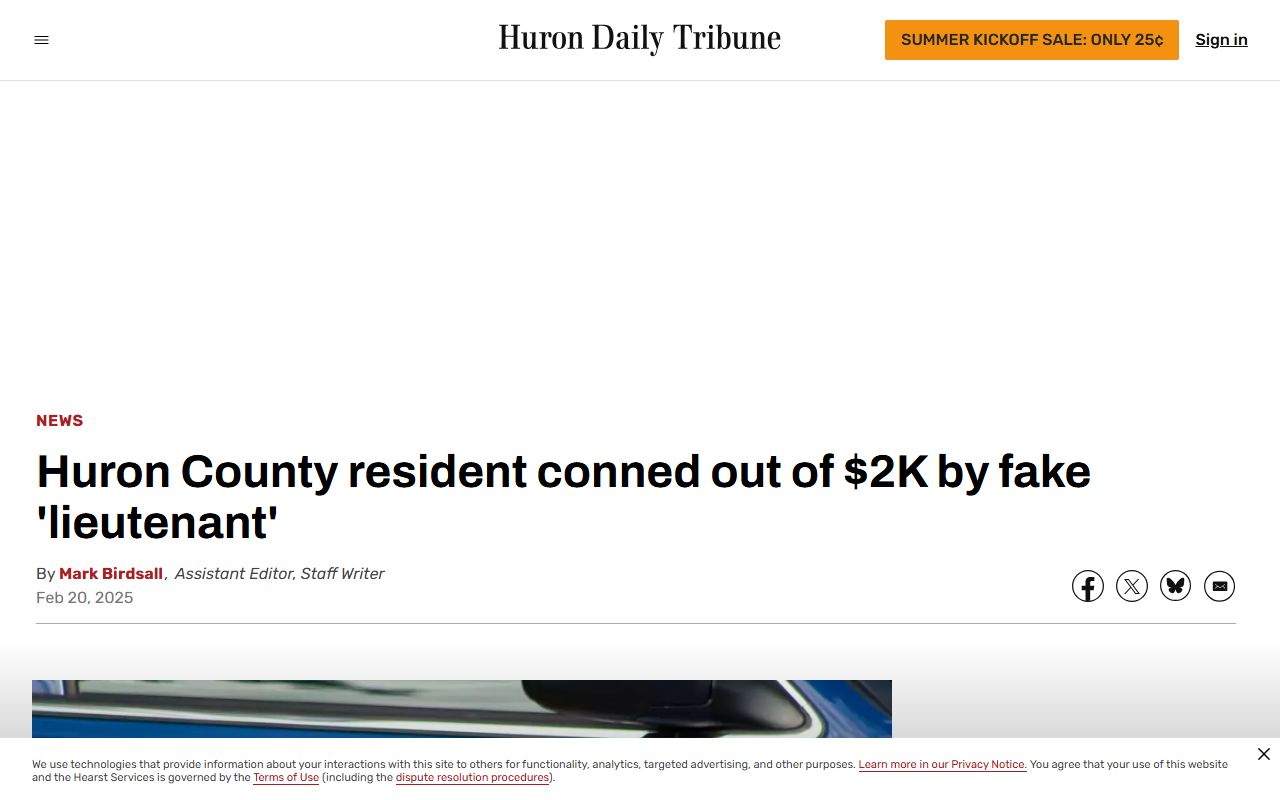
The lesson is simple. Never pay a caller who pressures you over a warrant. Call the court back using a number you look up yourself, not one the caller gives you.
How to Resolve a Shiawassee County Warrant
Handling a warrant is a process, not a panic. A clear order of steps protects your rights and your wallet. Move through them in sequence and confirm each result. Legal advice early is worth far more than a rushed appearance.
- Confirm the source is real. Ignore any call demanding payment by gift card, barcode, cryptocurrency, or app.
- Identify the type. Decide if it is a District Court traffic or misdemeanor matter, a Circuit Court felony, a probation issue, or a police investigation.
- Call the court or agency using official phone numbers, never a number from a suspicious caller.
- Ask about your options. Check for a court date, bond, a recall process, or whether an attorney can appear for you.
- If you turn yourself in, ask where to report and which payment methods are accepted. The jail lobby has a Canteen kiosk for accounts or posting bonds.
- Confirm the clearance. After a payment, plea, appearance, or recall, verify with the court and police that the warrant is closed.
Important: Talk to a lawyer before you surrender or appear on any warrant, since counsel can arrange bond, an attorney appearance, or a recall that reduces your risk.
If a warrant leads to arrest, the person may be booked at the county jail. Custody status then shows up through the Shiawassee County inmate records channels rather than any warrant page.
Sheriff Records and FOIA Limits
The Sheriff keeps law-enforcement records, and those follow a different access route than court files. Police reports, crash reports, and related documents are FOIA records requested through the Sheriff's records office by mail or fax. That channel produces reports, not a live warrant search.
The Sheriff's records and FOIA page explains how to request police reports and related documents.
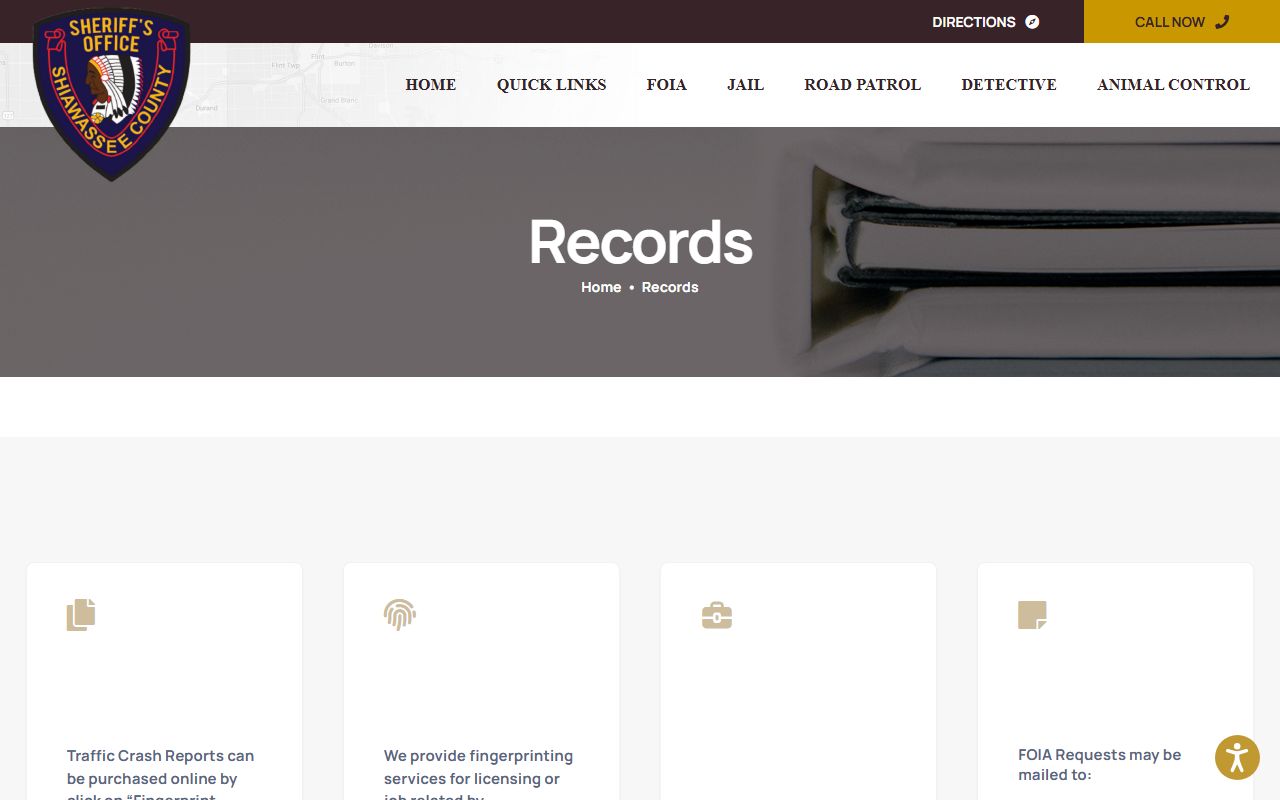
A FOIA request may show that a report exists, but it will not clear or confirm a warrant on demand. For warrant status, the court and the assigned agency remain the reliable sources.
Statewide and Restricted Warrant Access
Michigan has no public statewide active-warrant search. The Law Enforcement Information Network, or LEIN, carries warrant data, but it is restricted to law enforcement. Ordinary residents cannot query it. That is why local court and police contact stays central to any Shiawassee County warrant search.
Some warrants stay out of public view by design. Search warrants can remain sealed until they are served. Juvenile matters are confidential and open only by court order. Federal warrants sit with federal agencies and courts, not the county.
When a warrant follows new charges, the charge detail may surface later in the case record. The prosecutor's charging decisions, not the warrant itself, shape what the court file shows as the case moves forward.